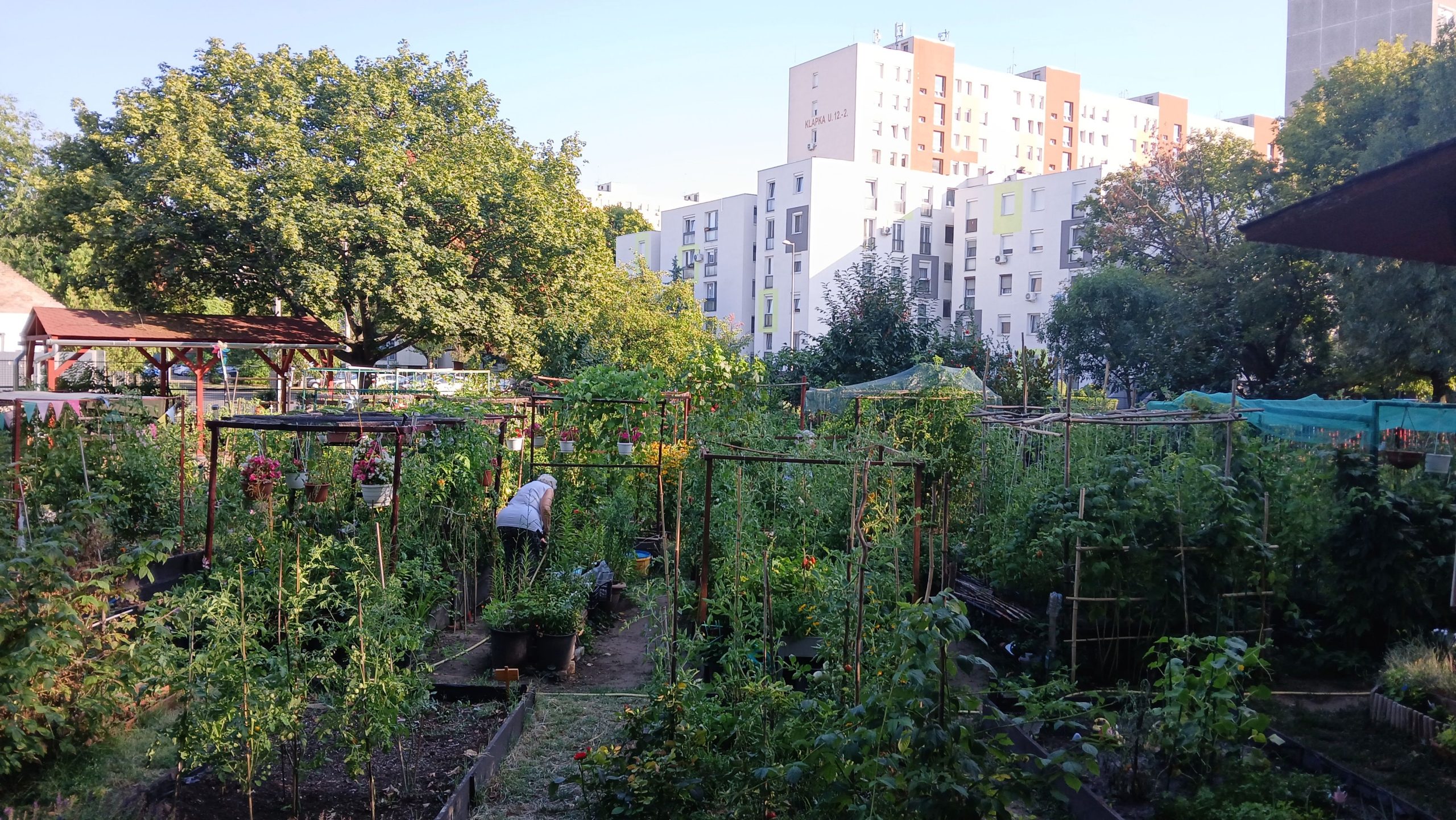
According to an ancient Chinese proverb, if you want to be happy for an hour, get drunk. If you want to be happy for a year, get married. If you want to be happy for a lifetime, garden. This is especially true when you garden in a community.
In a community garden, 20 percent of the time is spent on gardening, and 80 percent on community life: tending the garden beds and common areas, garden meetings, conversations, garden parties, playing with the kids, and relaxing. Everyone needs to break free from the confines of their home or workplace, become part of a larger group, and focus on something other than their daily routine. There are so many different things to talk about in a garden, and you can hear countless new stories, all while the garden provides plenty of activities and joy.
Gardening offers value in many ways: it provides a sense of purpose and responsibility, a sense of accomplishment and growth, improved physical and mental well-being, as well as community connections and collaboration. For many people, being close to nature and experiencing the tangible results of their own labor—the vegetables and fruits they grow—is important.
Everyone places a different emphasis on these aspects, and everyone can find the benefit that matters most to them.
Of course, the quantity of the harvest is very important. Homegrown produce is always better and healthier than store-bought vegetables, and there’s a special bond that connects the gardener to it. What’s more, a surprisingly large harvest can be gathered from a seven- to eight-square-meter garden bed, especially now that s
The fundamental secret to the survival of urban community gardens lies in a kind of mutual benefit—a “win-win” situation—for the gardeners, local residents, and the city (or district) government, in which everyone reaps the benefits the gardens have to offer.
Overall, urban community gardens function best when they build on both practical benefits and the community experience. The key to success lies in the commitment of the participants, effective collaboration, and a supportive environment—together, these elements enable the gardens to become truly valuable and livable urban spaces.