
It seems Europe is heading straight into the next crisis: an economic collapse resulting from energy shortages and rising prices. Even if the Strait of Hormuz were to reopen tomorrow, Europe would still not escape an energy crisis. EU leaders are preparing to impose the same restrictions we saw during the COVID-19 pandemic: everyone should save energy, avoid driving, work from home, and cut back wherever possible. At least summer is coming, so Europe won’t freeze to death.
However, there will be a significant general rise in prices, with food prices in particular skyrocketing.
Over the past century, a green revolution has taken place in agriculture, with mechanization, automation, new breeding methods, genetic engineering, and, more recently, even artificial intelligence becoming integral to mass food production. This was a true paradigm shift, resulting in humanity overcoming Thomas Robert Malthus’s population growth barrier—that is, modern agriculture produces more food than global population growth demands, especially considering that the world’s population has now reached 8.2 billion. Of course, not everyone benefits equally from the fruits of food production, but it can be said that we have succeeded in eliminating famines on Earth. Cheap energy has become the most important foundation of modern life; our technological civilization is endlessly energy-hungry, and everything we call prosperity depends on cheap energy.
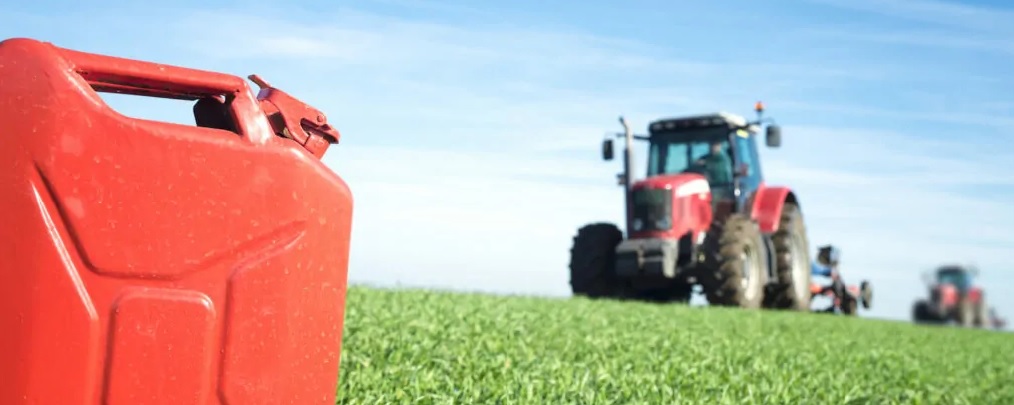
Rising energy costs, whether for fuel or natural gas, will significantly drive up the cost of food production. The fuel consumption of agricultural machinery, the soaring prices and reduced availability of natural gas-based fertilizers, the rising cost of irrigation energy, and transportation costs will all increase, and a significant rise in food prices is expected. The equation is simple: without fertilizers, yields will be lower; without mechanization, efficiency will be lower; and with more expensive fuel, more costly machinery and transportation, food prices will rise globally. Here in Europe, food prices will rise; in the world’s less fortunate regions, there will be famine. This will lead to serious social tensions everywhere.
Let’s take a closer look at global poverty. Today, 800 million people worldwide live in extreme poverty—that is, on the equivalent of $3.50 a day—primarily in Africa, certain countries in the Middle East, and parts of Asia. If we focus only on poverty defined as living on $5.50 a day, that number rises to 3.4 billion people—nearly half the world’s population. (Our World in Data/poverty). One measure of poverty is what percentage of their income an individual or family spends on food. Those living in extreme poverty spend their entire income on food or survive on international humanitarian aid. The poor, on the other hand, spend 50–80% of their income on food, meaning that rising food prices will severely affect them; they will experience a sharp decline in their standard of living, and many will slip into the category of extreme poverty.
A rise in food prices could have a number of consequences: increased global poverty, rising socio-political tensions, the collapse of governments, growing chaos, the destabilization of entire regions, and the onset of another wave of mass migration—as we saw in 2015.
The wars and political turmoil of recent years have made global energy exports extremely uncertain. Energy has become a weapon and a tool for putting pressure on others; the possession and export—or blocking—of energy resources are all tools of power. It is no coincidence that energy infrastructures (Nord Stream pipeline, Iranian oil fields, etc.) have become prime targets. It appears that rising prices for energy sources and raw materials will persist for a long time; repairing deteriorated or bombed-out infrastructure cannot be done overnight. It would be wise to prepare for the impact.
Europe will be hit hardest by the conflict over energy resources; it has virtually no source from which to obtain hydrocarbons—at least not cheaply. This will further undermine the continent’s competitiveness and drive up prices; the effects are already being felt, but the situation will become critical by the second half of the year. We’re already hearing about a rationing system planned for fuel—what if this ends up applying to food as well? It will be interesting to see how our modern societies, which have never experienced anything like this before, will cope.
What can be done in this situation? We need to adopt the practices of crisis gardens and wartime self-sufficiency. Anyone with a garden should create raised beds and grow food for self-sufficiency; this is the best way to mitigate the crisis. Community gardens should increase production as much as possible. I fear there will be looting and crop theft; if energy shortages and rising food prices occur, people will not respect the work of community gardeners and will take whatever they can.
What is math?
Over the past decade and a half, we have compiled garden statistics from several gardens. The results showed that in urban gardens, a single square meter of garden bed yielded approximately 10,000 forints worth of produce, with an investment of 2,000 forints—meaning that self-sufficient gardens can generate a 400% return. By the way, this ratio was also observed in the crisis gardens of the First and Second World Wars. If inflation and food prices spiral out of control, this ratio will be even higher.
Numbers in the Community garden
Spring is here. If you have the opportunity, plant and grow crops, because it will pay off—a serious crisis is coming. It’s worth revisiting self-sufficiency practices, because you’ll need them.